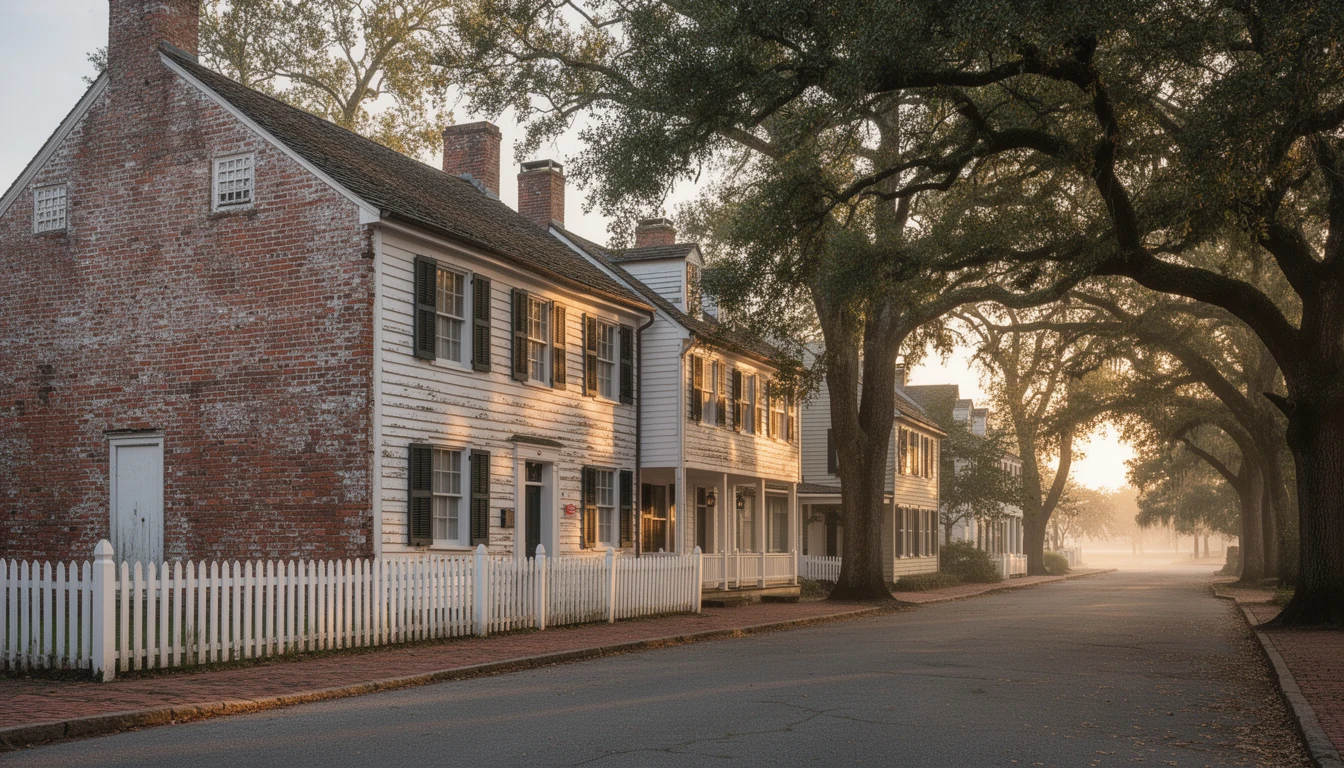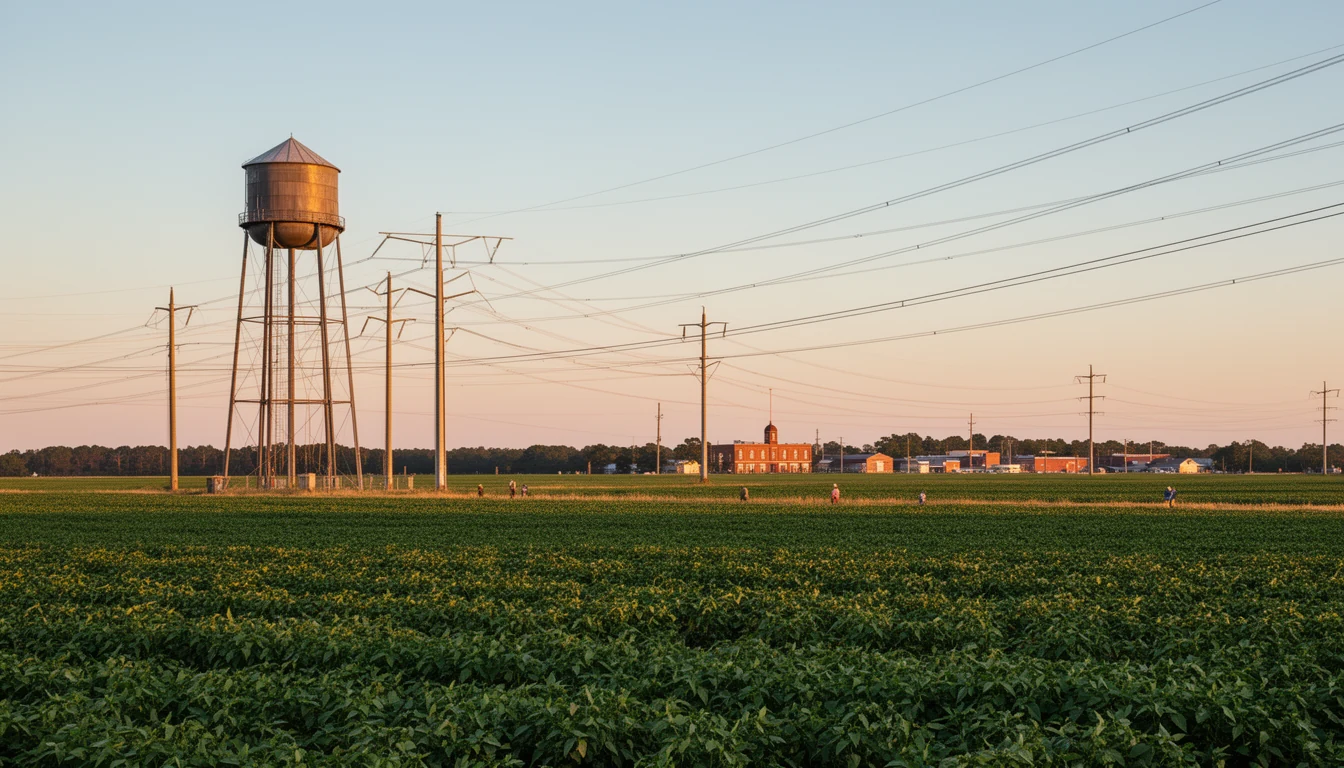


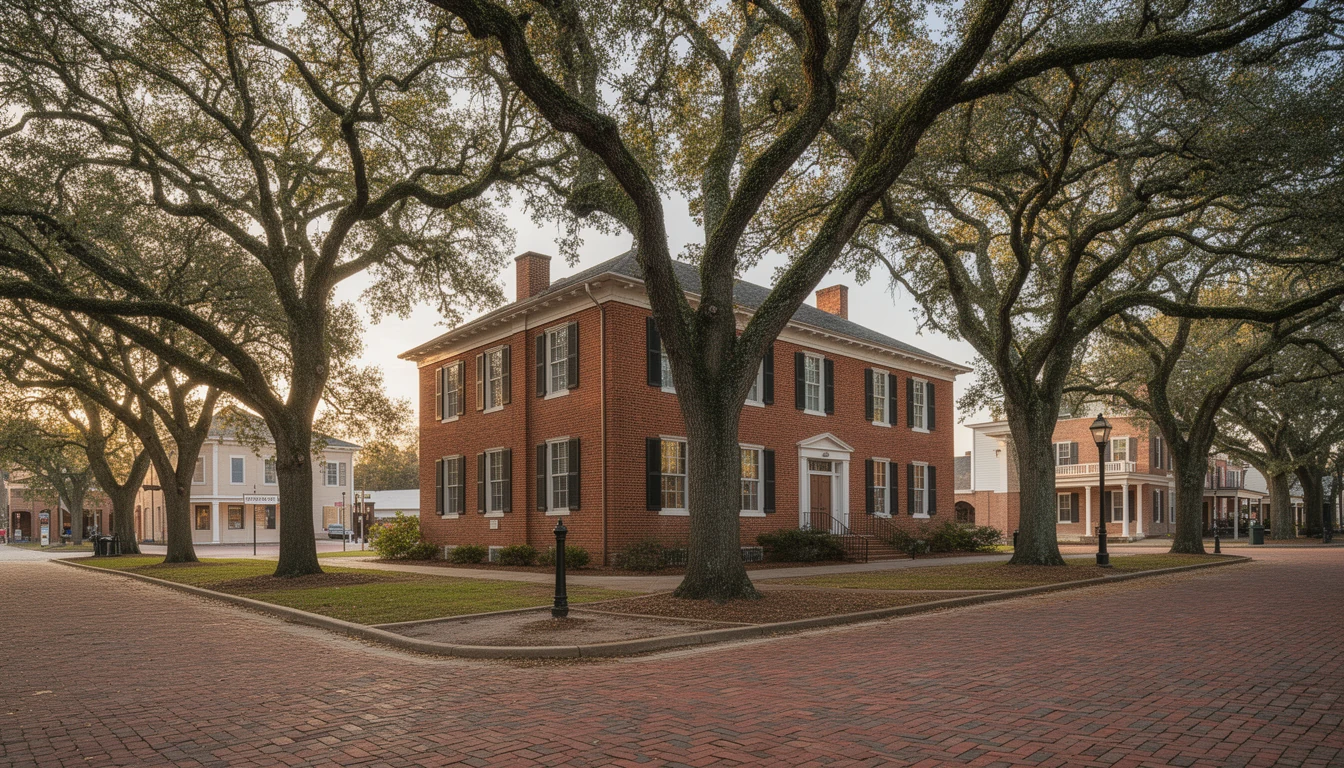
Two houses a mile apart in Halifax County can carry tax bills that differ by more than a thousand dollars a year, and nothing about the houses explains the gap. The location does. Four separate layers decide what you pay: the county, the town if you are inside one, the school district, and the fire district. If you are shopping this county, run that math before you fall for a porch.
The county rate, and who sets it
Halifax County’s rate for the fiscal year that runs July 1, 2025 through June 30, 2026 is 70 cents per $100 of assessed value. The Board of Commissioners sets it each June in the county’s budget ordinance, and that ordinance is where to read the number from the source instead of a summary. North Carolina levies no state property tax, and property here is assessed at 100 percent of appraised value.
That last part matters more than it sounds. Your tax is not a percentage of what you paid for the house. It is a percentage of the county’s assessed value for the parcel, which can sit above or below your purchase price, especially in the back half of a revaluation cycle when the assessment reflects a market two, three, or four years old.
Town taxes stack on top
If the parcel is inside a town, the town rate is added to the county rate. Here is the fiscal year 2025-26 table the county’s Economic Development Commission publishes:
- City of Roanoke Rapids: 68.1 cents
- Town of Weldon: 72 cents
- Town of Scotland Neck: 73 cents
- Town of Enfield: 92.7 cents
- Town of Littleton: 76 cents
- Town of Halifax: 62 cents
- Town of Hobgood: 72 cents
Outside town limits, none of it applies and you pay the county rate alone. The catch is knowing which side of the line a house sits on. A mailing address will not tell you, and it will not tell you the county either. On the Lake Gaston side of Halifax, a Littleton mailing address can sit in Warren or Northampton County, with a different tax rate and a different school system. Chapter 3 walks through that. Check the parcel, not the post office.
School supplemental taxes: the line nobody mentions at the showing
This is the Halifax County detail that catches buyers from other parts of the state, and it comes from a genuine oddity: this county runs three separate school systems, Halifax County Schools, Roanoke Rapids Graded School District, and Weldon City Schools. A city district can levy its own supplemental school tax on property inside its boundaries. The district’s board sets the rate, the county computes and collects it, and it appears as a separate line on the county tax bill under N.C. Gen. Stat. 115C-511.
Both city units use it. Weldon City Schools has carried a 20-cent rate per $100 since the 1940s, and voters there turned down a proposed increase. Roanoke Rapids Graded School District set its 2026-27 supplemental rate at 24 cents per $100, up from 21.5 cents, on a 5-2 board vote in June. The county’s own budget ordinance also carries a 10-cent supplemental levy inside the Halifax County Schools administrative unit.
Districts and towns are different shapes, so the layers do not line up neatly. Two houses five minutes apart can land in different school districts and pay different tax on the same assessment, which is one more reason a showing is not the right place to guess. Ask which district serves the parcel, and confirm it with the district rather than the listing.
Fire districts, and the fine print in every rate table
The FY 2025-26 budget ordinance also levies special fire district taxes, district by district, for the volunteer fire districts across the county. Each has its own rate per $100, and it applies only inside that district. This is the reason the published rate tables carry a line saying the rates exclude special assessments, which are location specific. Fire district lines follow roads and service areas, not town limits, so it is possible to be outside a town and still pay a district levy, or to be inside a town and sit in a district with its own add-on.
None of this is a reason to avoid a parcel. It is a reason to pull the tax record before you write an offer, because a 20 or 30 cent difference per $100 is real money at these price points.
What a $200,000 assessment actually pays
Use the county and town rates only for this first pass, since school and fire district levies depend on the parcel:
- Unincorporated county, county rate only: $1,400 a year
- Town of Halifax: $2,640
- City of Roanoke Rapids: $2,762
- Town of Weldon: $2,840
- Town of Scotland Neck: $2,860
- Town of Enfield: $3,254
Those figures are county plus town. Add the school supplemental rate if the parcel is in one of the city districts, add the fire district rate if it sits in a district, and the ceiling moves. Run the same math at $150,000 and the spread between the cheapest and costliest of those locations is still more than $1,300 a year for the same assessed value.
The practical version for a buyer: tax rate is part of the price of a location, and in Halifax County it varies enough that two listings at the same asking price are not the same monthly cost. A $180,000 house in the county and a $180,000 house in Enfield are not the same payment, and the difference does not show up in the listing at all.
Revaluation: Halifax runs a four-year cycle
Halifax County reappraises real property on a four-year cycle, which is faster than the eight years state law allows. The last revaluation took effect January 1, 2024, and the one before it took effect January 1, 2020, which puts the next one on track for 2028.
A revaluation resets assessed values toward current market value. It does not automatically raise your tax bill, because the commissioners set the rate after the values land and can adjust it, but it does move the base each parcel is taxed on, and it moves parcels by different amounts. Two neighbors who were paying nearly the same tax can separate at a revaluation. The county’s tax base for this fiscal year is roughly $4.66 billion, which is the number the levy is spread across.
If you buy a house that was revalued in 2024, you are inheriting the newer assessment and the tax bill that comes with it, so ask for the current bill rather than a three-year-old one. If you think an assessment is wrong, the county has a process: an informal appeal to the Tax Assessor within 30 days of the notice, and then the Board of Equalization and Review, which typically adjourns by early May of the appeal year. That window is short, and it is not something a new owner can redo later on the prior year’s value.
Relief and deferral programs worth asking about
Three state programs run through the county tax office, and a buyer inheriting land or buying late in life should know they exist.
The elderly or disabled homestead exclusion removes the greater of $25,000 or 50 percent of appraised value from the tax base for owners who meet the age or disability test and an income limit that the state adjusts every year. The application deadline is June 1.
The disabled veteran exclusion takes the first $45,000 of value off the books for a veteran with a permanent and total service-connected disability, or an unremarried surviving spouse, with no income test.
Present use value is the one that matters most in a farm county. Qualifying agricultural, horticultural, and forest land is taxed on its use value rather than its market value, which is a large reduction on acreage. Applications run during the regular listing period in January, and a new owner of enrolled land must reapply within 60 days of the transfer to stay in the program. Miss that, and the land reverts to market value and the deferred tax can come due. On a parcel with a big gap between its use value and its market value, that deferred liability is a closing-table number, not a footnote.
Two lines your tax bill does not cover
If you plan to rent a house short term near the lake or the interstate, the county’s occupancy tax is separate from property tax: 5 percent countywide, and 6 percent inside the City of Roanoke Rapids. It applies to the rental revenue, not the property, and it is worth knowing before you underwrite a rental.
And if the house sits in a Special Flood Hazard Area, flood insurance is a separate policy and a separate escrow item from your taxes and homeowner’s insurance. On the Roanoke, that is parcel-level homework, and the creek-side house and the one up the hill are not the same purchase.
What to do before you write an offer
Ask for the current tax bill, not an old one. Look up the parcel on the county’s property search and check the assessed value, the town limits, the school district, and the fire district as they apply to that exact parcel. Then budget with room, because the rate is reset every June and the assessment resets on a four-year clock you do not control.
That is the difference between buying a house and buying a tax bill sight unseen. Both are fixable, but only one of them is negotiable before closing.
Travis pulls the tax card, the district lines, and the flood map on every property he writes an offer on, and he will tell you when a cheap house carries an expensive bill. Call or text him at (252) 202-4945, or start with the Roanoke Rapids listings and the under-$150K band to see the price ranges this math applies to.
Tax rates and valuations are for fiscal year 2025-26 and are reset annually by the Board of Commissioners; school supplemental and fire district rates are set separately. Confirm current rates, deadlines, and program eligibility with Halifax County Tax Administration before relying on any figure here. NC Real Estate Broker, License #334264. Equal Housing Opportunity.