
Halifax County Land: Seven Questions Before an Offer


In this post
- 1. Does the deed describe the same land the tax card does?
- 2. Who else has a signature on this land?
- 3. Is the way in written down?
- 4. What does the tax office say about present-use value?
- 5. Will the ground take a septic system?
- 6. Where does the water go when the Roanoke rises?
- 7. What else is on the land besides dirt?
- What this list is for
A land listing in Halifax County usually starts with a photograph of a gate. After that come a price and an acreage figure. Very little else. There is no kitchen to inspect and no roof to date. Nothing in the file tells you whether you can put a house on the ground or how you would get to it in February.
I walk these parcels with buyers from Littleton down to Scotland Neck, and the questions that decide a deal are almost never the ones on the listing sheet. They are the ones you can answer in a week at the courthouse and the health department. Here are the seven I would settle before I let an offer go hard.
1. Does the deed describe the same land the tax card does?
The tax card is an assessment record. The deed is the legal description. On old Halifax County parcels, those two documents can disagree about acreage and neither one is a survey. Plenty of these tracts were divided by metes and bounds long before anyone drew a plat, and a line that once ran to a white oak now runs to a stump that is gone.
The county’s deed books reach back to 1732, with online indexes and images from 1976 forward, and since January 1, 2016 the Register of Deeds will not record a deed without the Tax Collector certifying that no delinquent taxes are a lien on the property. That tells you the taxes are clear. It tells you nothing about where the boundary sits.
Order the survey during due diligence. On a wooded tract, a boundary line you assumed was a property line is often a fence somebody built in 1987.
2. Who else has a signature on this land?
Rural land in this county moves through families, and families do not always probate an estate. A parcel can sit in the names of four heirs who have never met, or in a life estate where the person selling owns less than the listing implies. Every owner on the deed has to sign, or a court has to authorize the sale.
North Carolina addresses the hardest version of this in Article 2 of Chapter 46A, the state’s version of the Uniform Partition of Heirs Property Act. It gives heirs who hold land in common a defined process before a forced partition sale, including notice and a chance to buy the others out. That is a protection for the family. It is also a reason a closing date can move.
Ask the closing attorney for a full title search and read the vesting deed. If the seller cannot name every owner, that is your answer.
3. Is the way in written down?
A road on the ground is not a road of record. Some tracts here front a state-maintained road and the access question is easy. Others sit behind a gate at the end of a private lane that crosses a neighbor’s field, and the right to use that lane has to be in the chain of title as a recorded right-of-way.
Read the easement language, not just its existence. Some easements limit what you can build along them, and some put maintenance on whoever uses the road. Ask who grades it now and who paid for the last load of gravel.
If you plan a new connection onto a state-maintained road, the N.C. Department of Transportation controls that work. A driveway or other connection inside the state right of way needs a permit before construction, and the district office decides what the site requires.
4. What does the tax office say about present-use value?
Farm and forest land enrolled in present-use value is taxed on what it earns in use, not on what it would bring on the market. That is why the annual bill on a large tract can look impossibly low. The gap is deferred tax, and it follows the land.
When a parcel loses eligibility, the deferred taxes for the preceding three fiscal years come due under N.C. General Statute 105-277.4(c). A new owner who wants to keep the enrollment has to reapply within 60 days of the transfer, and applications are taken during the January listing period. Miss the window and you may be looking at both a market-value bill and a deferred tax bill.
Ask the tax office for the deferred tax figure in writing before you offer. It is a real number, and it belongs in your budget next to the survey.
5. Will the ground take a septic system?
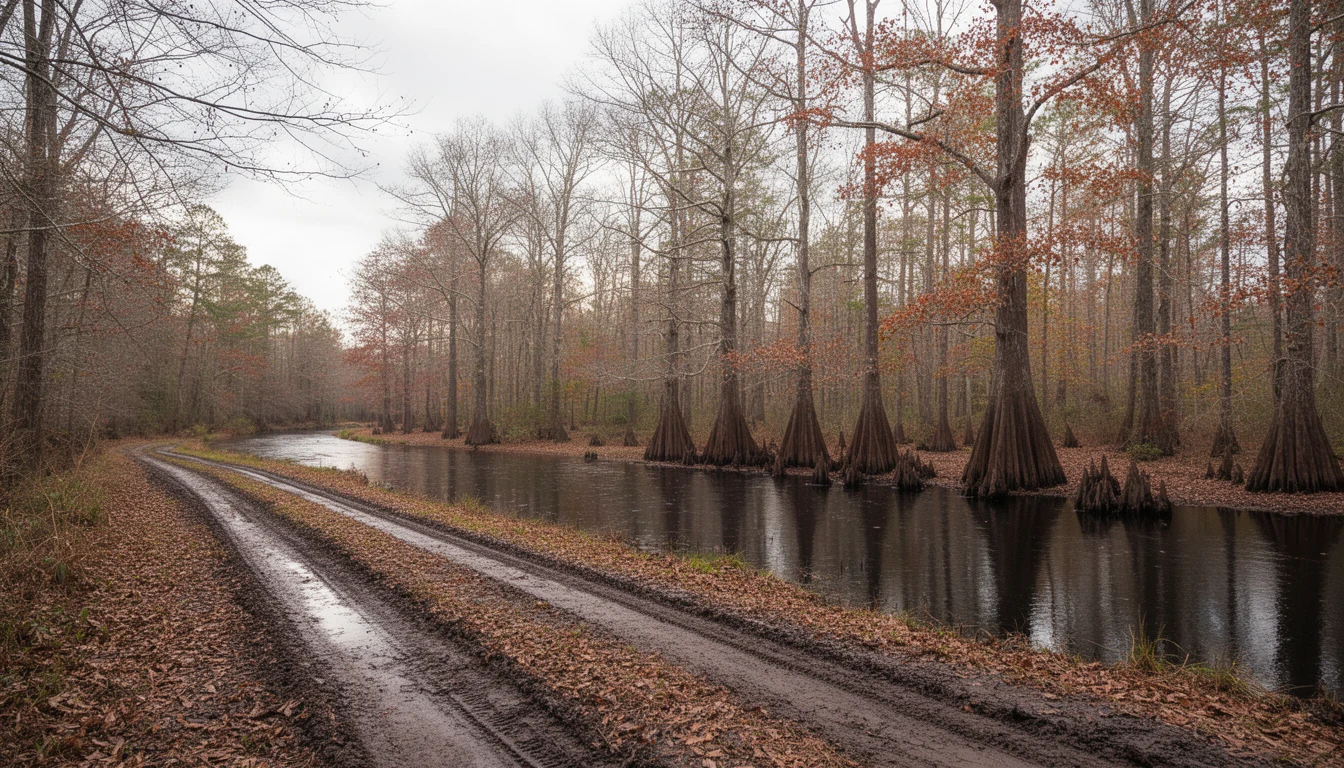
Outside the town water and sewer systems, a house on this land needs a well and a septic system, and the soil decides whether that is possible. Halifax County Public Health System’s Environmental Health section, at 19 North Dobbs Street in Halifax, handles those permits.
A soil evaluation on the specific lot is the only answer that counts. Low, wet ground and tight clay behave differently from the sandy upland, and a lot that will not pass is not a building lot at any price you want to pay. Ask for the permit history too. If a previous owner applied and was turned down, that record exists.
Wells are the other half. Water in the Coastal Plain comes from varying depths and quality, so a yield test and a full water panel belong in due diligence, not after closing.
6. Where does the water go when the Roanoke rises?
FEMA’s flood insurance rate maps cover Halifax County, and the Halifax-Northampton Regional Hazard Mitigation Plan maps the 1 percent and 0.2 percent annual chance flood areas along the Roanoke and its creeks. River bottom is some of the most productive ground in the county and some of the wettest.
Pull the map for the exact parcel, then get an insurance quote before you write the offer. A premium is a yearly cost that changes the math on a cheap tract. Being outside the mapped zone does not guarantee dry ground, and being inside it does not make the land unusable. It makes the insurance part of the purchase price.
7. What else is on the land besides dirt?
Timber may or may not convey. A stand of pine can carry real value, and it can also carry a recorded timber deed or cutting contract that gives someone else the right to be there with equipment. Ask what the seller owns and read the exceptions in the title work.
Then walk the ground. Old ditches, fill piles, and dumped equipment do not show up on a listing sheet. Neither does a utility easement. Neither does a hunting lease that runs for another two seasons.
If the timber is part of what you are buying, hire a forester for a cruise. The trees are worth what a buyer will pay for them, not what the listing says.
What this list is for
None of these seven questions requires a lawyer to ask, and most of them cost nothing to answer before you sign. The expensive version is learning them after closing, when the survey is yours, the deferred tax is yours, and the lot still will not perc.
Land in Halifax County rewards patience. The buyers who do well here are the ones who read the deed and walk the boundary before they fall for the gate.
If you are looking at acreage in Halifax County, call Travis Old at Horizon Realty Group, (252) 632-8681. He will pull the tax card and the flood map with you, walk the line, and put you in touch with the surveyors and well drillers who work this county. NC Real Estate Broker, License #334264. Equal Housing Opportunity.
Keep reading
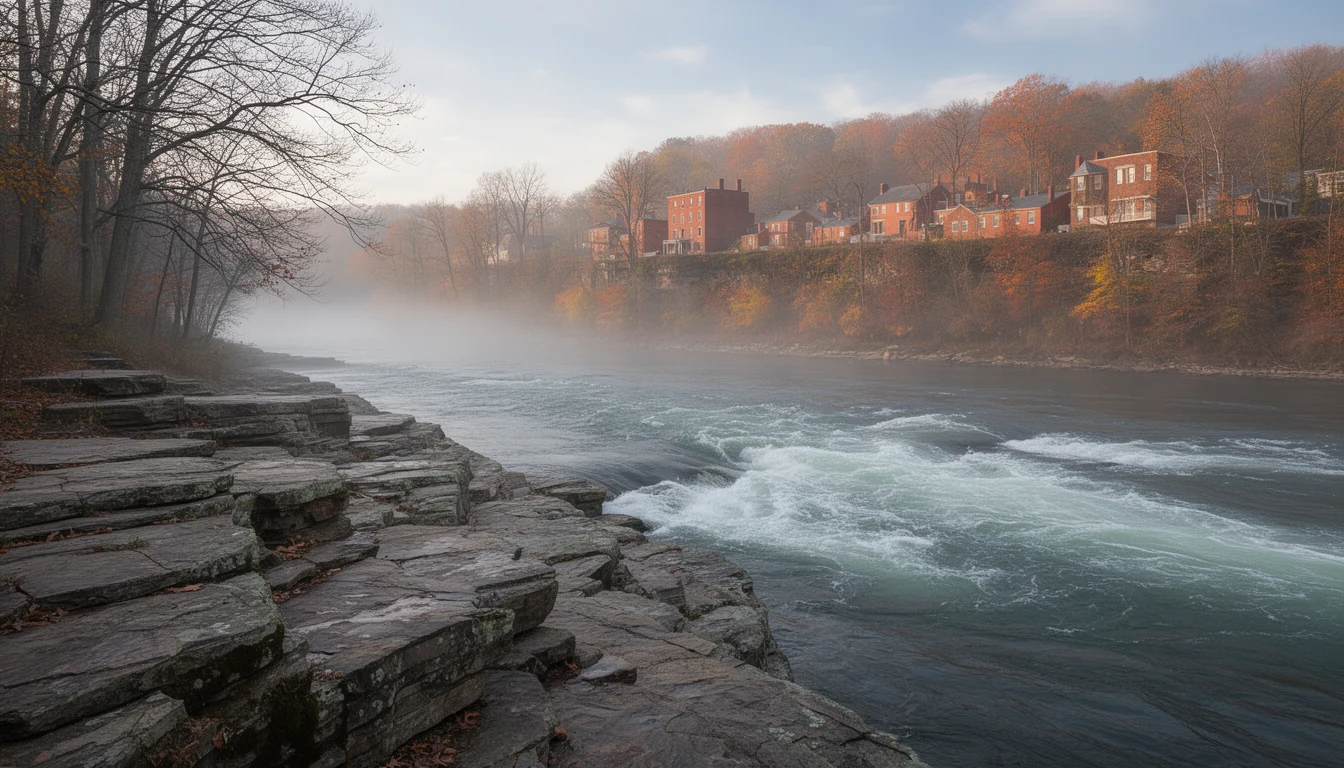
Weldon's Fall Line: Canal, Rail, and the Houses Left Behind
Weldon grew up around a granite ledge, then a canal, then a railroad. What those decades left behind in the housing stock, block by block, for buyers.
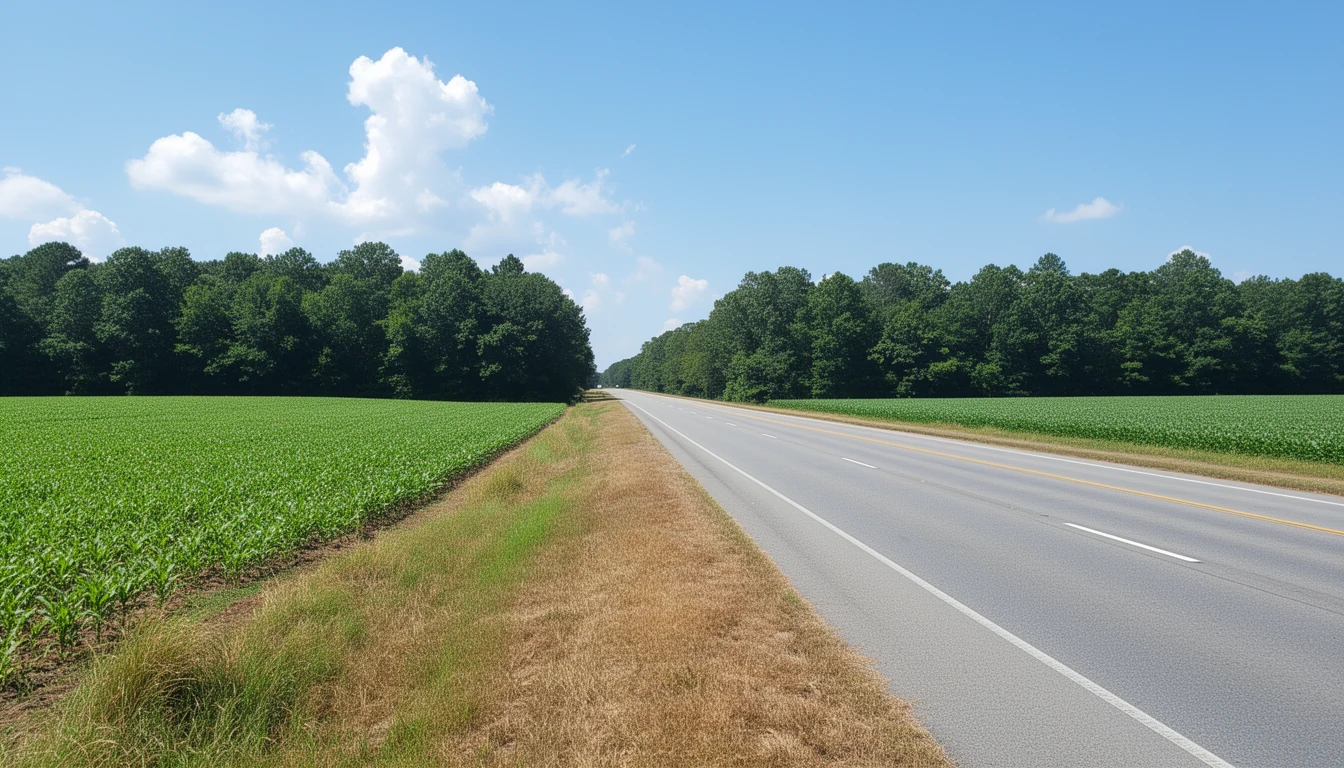
Five Drives That Decide Where You Live in Halifax County
Five drives that decide where you live in Halifax County: I-95 south to Rocky Mount and north to Virginia, US-301 through the towns, and the lake road.

Halifax County Property Taxes: Four Layers, One Bill
Halifax County property taxes for buyers: FY 2025-26 rates town by town, school supplemental levies, the four-year revaluation cycle, and escrow.